Let’s be completely honest: the concept of ‘lifestyle’ has been hijacked. If you browse through social media today, lifestyle looks less like actual living and more like a carefully staged photoshoot. It’s defined by pristine, all-white minimalist apartments, unrealistic 5:00 AM routines that require an hour of meditation before sunrise, and an endless cycle of buying aesthetic gadgets to fix our daily chaos.
But real lifestyle isn’t something you purchase from a curated catalog. It is the deliberate architecture of your daily choices. The true lifestyle shift of 2026 isn’t about looking perfect to the outside world; it’s about Intentional Living—the practice of ruthlessly auditing what enters your space, your mind, and your daily schedule so that you can actually enjoy the life you are building.
If you are tired of chasing trends that leave you feeling unfulfilled and exhausted, here is an unfiltered, realistic guide to restructuring your lifestyle from the ground up.
1. Radical Digital Minimalism: Reclaiming Your Attention Span
You cannot build an intentional lifestyle if your brain is constantly being over-stimulated by infinite scrolling. We live in a world where our attention is the most valuable commodity, and we give it away too easily. Digital minimalism isn’t about throwing your smartphone into the ocean and moving to a cabin in the woods; it’s about establishing hard boundaries.
The average person checks their phone over a hundred times a day, often completely unconsciously. This constant fracturing of our attention span creates a subtle, underlying layer of anxiety that tints our entire day.
- The Audit: Take a brutal look at your screen time. Identify the apps that leave you feeling depleted rather than inspired or connected.
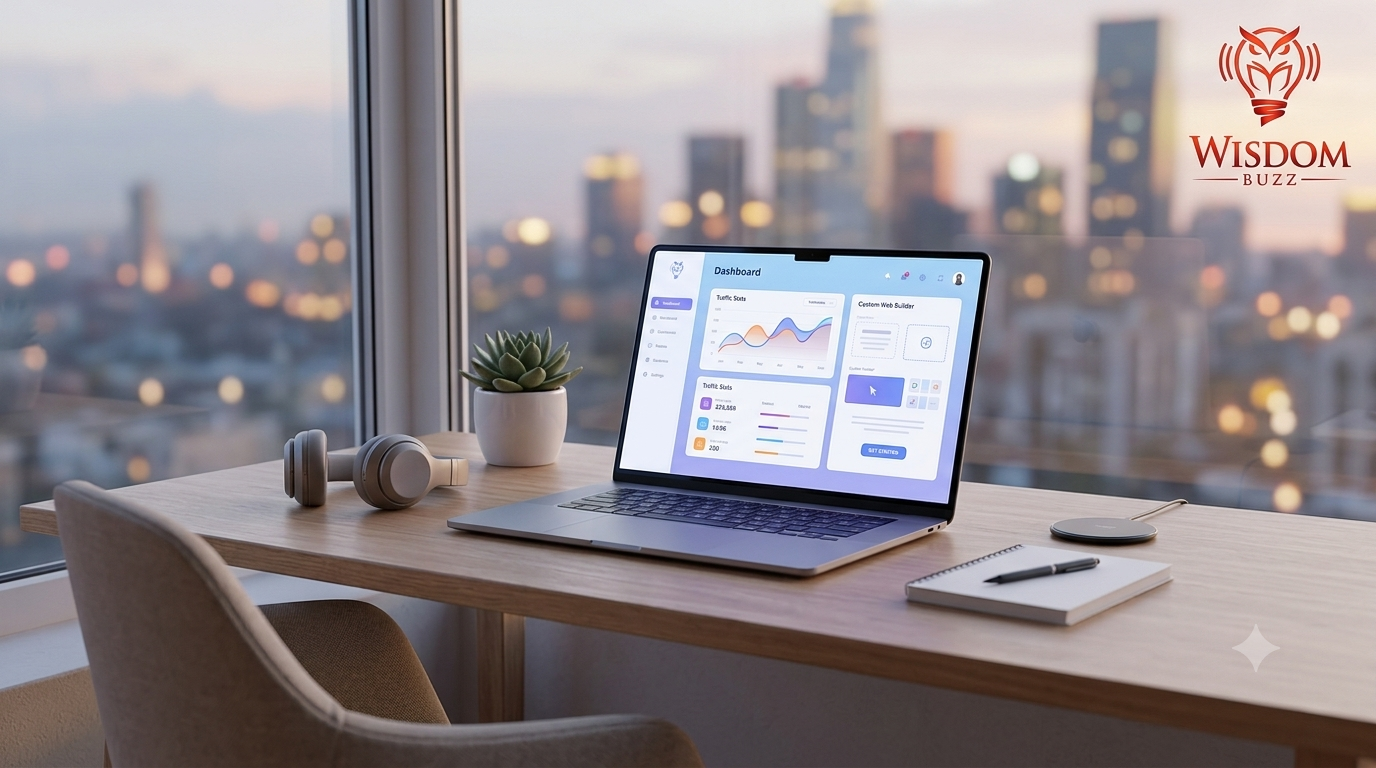
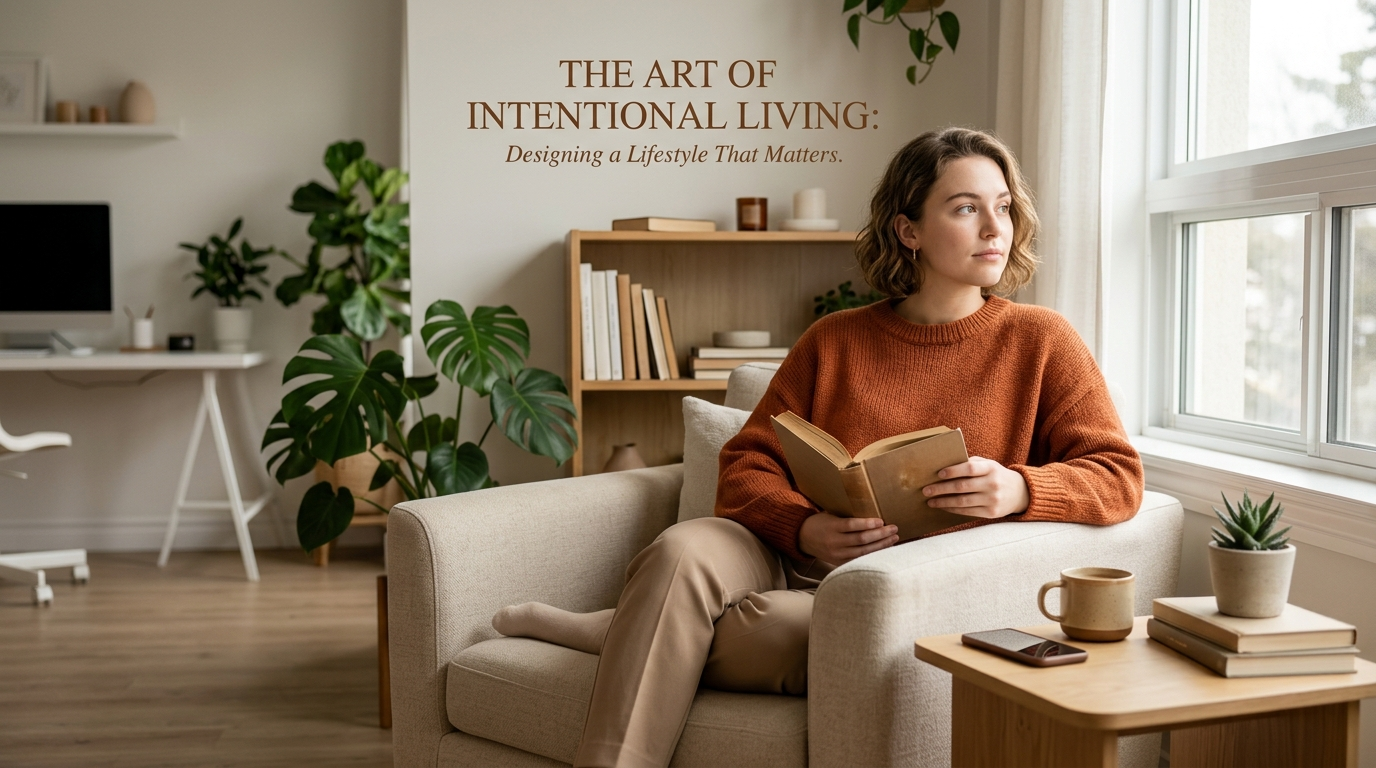
- The Framework: Implement a “Digital Sunset” where all work-related apps and social media feeds are locked down after 8:00 PM. Treat your physical environment like the one in our banner image—a space meant for focus, relaxation, and genuine presence, not constant notifications.
- The Result: You suddenly reclaim two to three hours of your evening. This is time that can be spent reading, engaging in deep conversations, or working on a passion project that actually moves your life forward.
2. Curating “Micro-Spaces”: Why Your Physical Environment Rules Your Psychology
Your physical environment is an external manifestation of your mental state. If your desk is piled high with old receipts, your closet is overflowing with clothes you haven’t worn in three years, and your living room is cluttered with half-finished projects, your brain is constantly processing that chaos.
The modern lifestyle movement prioritizes the creation of “Micro-Spaces”—specific, curated areas in your home dedicated entirely to a singular, intentional purpose.
- The Dedicated Desk: A workspace stripped of distractions. No random clutter, just a clean surface, great lighting, and the essential tools you need to get into a state of deep work or creative flow.
- The Sanctuary Corner: A corner of your bedroom or living space that is entirely device-free. This could be a comfortable chair next to a bookshelf or a window sill filled with indoor plants. It exists solely for you to sit, think, sip your morning coffee, and disconnect.
A Reality Check: You don’t need a massive luxury apartment to achieve this. Even in a compact studio apartment, assigning a strict identity to a single corner changes how you behave in that space. When your environment is organized, your mind follows suit.
3. The “Slow Social” Shift: Quality Over Quantity in Connections
For the past decade, social success was measured by network size—how many followers you had, how many events you attended, and how many group chats you managed. In 2026, the pendulum has swung completely the other way. People are experiencing deep “social fatigue” and are actively shrinking their circles.
An intentional lifestyle requires moving toward “Slow Socials”—prioritizing deep, intimate, and distraction-free relationships over surface-level networking.
- Depth Over Breadth: It is far better to have three friends who truly understand your ambitions, your flaws, and your humor than thirty acquaintances with whom you only share casual small talk.
- The Practice: Replace chaotic group hangouts with focused one-on-one dinners or walks. Put the phones face down in the center of the table. Relearn the art of long-form storytelling and active listening.
4. Time Auditing: Moving from “Busy” to “Productive”
In corporate culture, being “busy” is often worn like a badge of honor. People love to complain about how packed their calendar is. But a truly elevated lifestyle values unscheduled time as the ultimate luxury.
If your day is booked back-to-back with obligations, meetings, and errands, you aren’t living a lifestyle; you are running a marathon on a treadmill.
- The “Hell Yes” Rule: If someone asks you to commit to an event, a project, or a casual hangout, and your immediate internal reaction isn’t an enthusiastic “Hell Yes!”, then your answer should be a polite but firm “No.”
- Protecting White Space: Intentionally block out empty spaces in your digital calendar. Label it “Open Time.” Use this time to do absolutely nothing planned—let your intuition decide whether you want to go for a run, sit outside, or take a nap. This empty space is where creativity and mental recovery actually happen.
The Unfiltered Reality (Conclusion)
An intentional lifestyle—one that embraces digital minimalism, respects the psychological power of your micro-spaces, and guards your time fiercely—isn’t about restricting yourself. It is about liberation. It is about choosing what matters to you rather than letting an algorithm or societal expectations decide for you.
When you strip away the aesthetic pressure and the need to constantly look busy, you are left with something incredibly rare: a life that actually feels good on the inside, not just one that looks good on a screen.
Where is your lifestyle currently feeling out of alignment? Are you struggling to set digital boundaries, or is your physical environment holding your focus back? Let’s open up the discussion in the comments below!